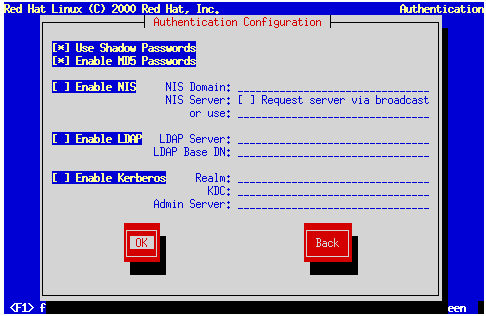
If you are performing a custom installation, your next step is to
configure the type of password authentication your Red Hat Linux system will use
(see Figure 14-33). You will also have the
opportunity to configure NIS support; If you are unsure as to whether or
not you should do this, ask your network administrator.
Here's a brief explanation of the authentication password prompts:
Use Shadow Passwords -- provides a very secure
method of retaining passwords for you. The password filed in the
/etc/passwd file is replaced by
/etc/shadow which is readable only by root.
Enable MD5 Passwords -- allows a long password
to be used (up to 256 characters) instead of the standard eight
letters or less.
Enable NIS -- allows you to run a group of
computers in the same Network Information Service domain with a
common password and group file. There are two options here to choose
from:
NIS Domain -- this option allows you to
specify which domain or group of computers your system will
belong to.
NIS Server -- this option causes your
computer to use a specific NIS server, rather than
"broadcasting" a message to the local area network asking for
any available server to host your system.
Enable LDAP -- LDAP consolidates certain types
of information within your organization. For example, all of the different
lists of users within your organization can be merged into one LDAP
directory. For more information about LDAP, refer to Chapter 7.
There are two options to choose from here:
Enable Kerberos -- Kerberos is a secure system
for providing network authentication services. For more information
about Kerberos, see Chapter 8. There are three
options to choose from here:
Realm -- this option allows you to access a
network that uses Kerberos, composed of one or a few servers (also known
as KDCs) and a (potentially very large) number of clients.
KDC -- this option allows you access to the
Key Distribution Center (KDC), a machine that issues Kerberos tickets
(sometimes called a Ticket Granting Server or TGS).
Admin Server -- this option allows you to
access a server running kadmind.
 | Please Note |
|---|
| | To configure the NIS option, you must be connected to an NIS
network. If you are unsure whether you are connected to an NIS
network, please ask your network administrator.
|
Unless you are setting up NIS, you will notice that both shadow passwords
and MD5 passwords are selected. We recommend you use both to make your
machine as secure as possible.



 Download